Insights
November 28, 2025
Agent Coaching Software: The ultimate buying guide for 2025

Varun Arora
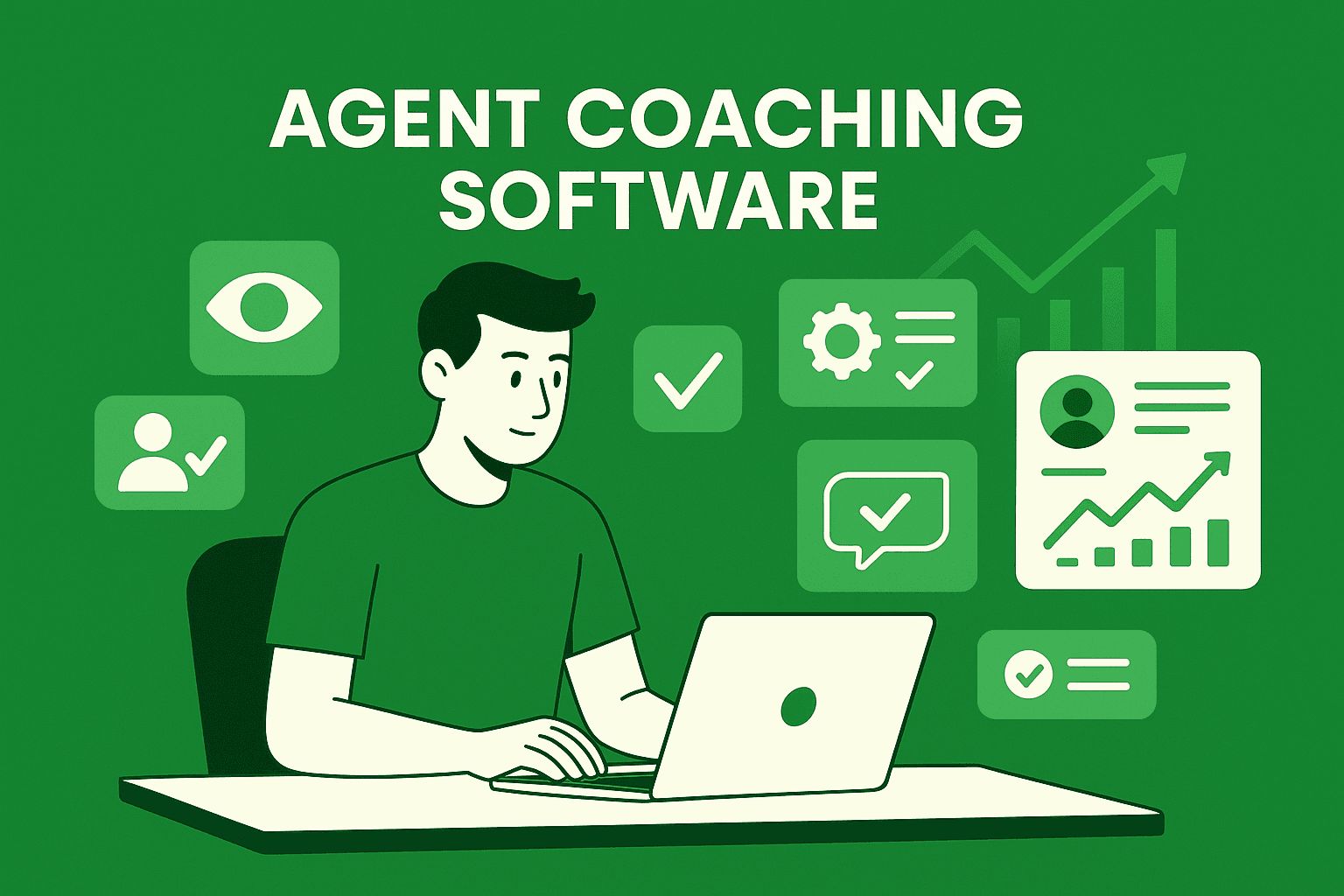
Agent coaching has become one of the most important levers for improving CX performance. As customer expectations rise, support organizations need structured, repeatable systems for coaching—not ad-hoc sessions or subjective feedback loops. That’s why more teams are investing in agent coaching software, a new category of tools designed to make coaching data-driven, consistent, and scalable.
This buying guide breaks down everything you need to know: what coaching software should solve, must-have features for 2025, how to compare vendors, evaluation criteria, and a ready-to-use shortlisting template.
Introduction: How agent coaching software changes in 2025
Customer support is changing fast. AI-driven QA, conversation intelligence, and automated workflows now give teams deeper insights into agent performance than ever before. But insights only matter if they lead to meaningful, measurable agent performance improvement.
That’s where agent coaching software comes in.
In 2025, coaching platforms must do much more than storing notes. They need to:
Automatically surface behaviors worth coaching
Eliminate coaching guesswork
Offer visibility into performance trends
Connect QA, coaching, and operational KPIs
Deliver measurable coaching ROI
This guide will help you choose the best solution for your team’s needs.
What coaching software should solve
Great coaching platforms solve three major challenges: visibility gaps, execution gaps, and measurement gaps.
Real-time performance visibility
Leaders often lack clarity on:
What behaviors agents struggle with
Which skills matter most for CSAT
Whether performance is improving week over week
Coaching software centralizes all this data.
Skill and knowledge gap identification
Agents rarely struggle because they don’t care—they struggle because they don’t know what to fix.
Your coaching platform should automatically identify:
Knowledge gaps
Soft skill deficiencies
Accuracy or compliance issues
Repeated QA score dips
This prevents coaching from becoming guesswork.
Workflow bottlenecks and inconsistent coaching
Without a system:
Each supervisor coaches differently
Coaching quality varies by manager
Insights stay siloed
Good coaching software ensures consistency across the organization.
Measuring coaching impact and ROI
Coaching should lead to measurable improvements in:
QA score trends
Handle time
First contact resolution
Customer sentiment
Error reduction
A modern platform tracks improvement automatically.
Non-negotiable features in 2025
Not all coaching tools are created equal. When choosing agent coaching software, these features are non-negotiable.
Automated QA insights and coaching triggers
In 2025, coaching must be automated—not manual.
Look for software that automatically:
Flags repeated behaviors
Highlights failure patterns
Suggests coaching topics
Detects trends across agents
Ties QA data directly to coaching actions
This ensures every insight leads to meaningful follow-up.
Personalized coaching plans and skill mapping
Your platform should allow you to:
Map agent skills and proficiency levels
Assign personalized coaching paths
Track mastery and progress
Compare agents across skill categories
Personalization increases performance lift exponentially.
Conversation intelligence and behavioral analytics
Modern coaching relies on deep visibility into how agents communicate.
Your software should include:
AI-powered call and chat analysis
Sentiment detection
Tone and empathy scoring
Escalation and risk signals
Talk-time and interaction quality metrics
These insights make coaching actionable.
Goal tracking and performance dashboards
Dashboards should provide clarity, not clutter.
A good coaching platform includes:
QA score trends
Coaching completion rates
Agent-level improvement charts
Cohort comparisons
Skill category heatmaps
Leaders should instantly see who’s improving—and who needs support.
Integrations with QA, CRM, and workforce tools
Seamless integrations reduce manual work and data fragmentation.
Your software should connect to:
QA systems
Contact center platforms
CRM tools
Helpdesks (Zendesk, Intercom, Freshdesk, etc.)
WFM systems
This creates a unified performance ecosystem.
AI-assisted coaching recommendations
AI should enhance coaching, not replace humans.
Expected capabilities in 2025 include:
Automatic behavior summaries
Suggested coaching scripts
Instant performance insights
Prediction of improvement areas
Recommendations for next coaching session
This speeds up prep time and increases coaching quality.
How to compare vendors
Here’s a structured feature comparison framework for evaluating coaching software.
Feature comparison framework
Compare vendors based on:
Category | Questions to Ask |
|---|---|
Automation | Does the tool automatically surface coaching opportunities? |
Accuracy | How accurate are insights, QA scores, or behavior tags? |
Coaching Tools | Are there templates, plans, and structured coaching flows? |
Analytics | Can we track coaching ROI and QA score trends? |
Ease of use | Will supervisors adopt it easily? |
AI quality | Are recommendations useful or generic? |
Reporting | Are dashboards customizable and intuitive? |
Tools that perform well across all six pillars are strongest.
Scalability, security, and compliance
For enterprise teams, evaluate:
SOC 2 / ISO 27001 compliance
Data encryption standards
PII masking options
User roles and access control
Scalability for global teams
Multi-language support
Compliance is not optional in 2025.
Data accuracy and automation reliability
Ask vendors:
What is the accuracy rate of automated tagging?
How is QA calibrated?
How does the model reduce false positives?
Can humans override AI outputs?
The reliability of automation determines coaching quality.
Pricing, flexibility, and contract considerations
Compare:
Per-agent vs. per-hour pricing
Whether QA automation is included
Hidden platform fees
Overages for conversation volume
Annual vs. monthly contract flexibility
The cheapest vendor is rarely the one with the best long-term value.
Case studies and evaluation criteria
Here are real-world examples of how different teams use agent coaching software.
Coaching software for fast-growing CX teams
Fast-growth teams use coaching platforms to:
Ramp new agents quickly
Maintain consistent quality through scale
Identify training gaps early
Prevent CSAT drops during high-volume periods
They benefit most from automation and skill mapping.
Coaching software for enterprise compliance teams
Enterprises rely on:
Compliance risk alerts
Accuracy-based QA
SOP and knowledge-base validation
Manager override workflows
Audit-ready reporting
Compliance features should be a top priority.
Coaching software for BPOs and multi-client operations
BPOs require:
Multi-tenant client management
Cross-client dashboards
Standardized yet customizable coaching flows
Low-cost scalability
QA-to-coaching automation
They need flexible, high-volume-friendly platforms.
Evaluation scorecard and decision criteria
Use this framework:
Criteria | Weight | Example Questions |
|---|---|---|
Coaching Features | 30% | Does it support structured coaching flows? |
Automation | 25% | Does it surface insights without manual review? |
Reporting | 20% | Can leaders track real-time improvement? |
Usability | 15% | Will coaches actually use it weekly? |
Price | 10% | Does the pricing align with value? |
Score each vendor 1–5 and total the results.
Shortlisting template for buyers
Use this checklist during vendor evaluations.
Internal requirement checklist
Our team size:
Our channels (voice, chat, email):
Required integrations:
QA system compatibility:
Reporting requirements:
Security requirements:
Coaching workflows:
must-haves vs nice-to-haves:
Vendor scoring grid
Rate each vendor 1–5:
Automation
Coaching tools
Dashboard quality
Reporting depth
AI capabilities
Integrations
Compliance
Pricing fairness
Red flags and deal-breaker signs
Avoid vendors that:
Can’t demonstrate accuracy benchmarks
Don’t allow QA calibration
Only offer generic coaching guidance
Can’t show coaching ROI reporting
Lock features behind hidden add-ons
If evaluation feels confusing or unclear, trust your instincts.
FAQs about agent coaching software
1. Why do CX teams need coaching software?
To scale consistent, measurable coaching and connect performance insights to behavior change.
2. What’s the biggest differentiator between vendors?
The accuracy and reliability of automated insights.
3. How long does implementation take?
Most teams go live within 2–4 weeks.
4. Do small teams benefit from coaching software?
Yes—especially those lacking structured coaching processes.
5. How do we know coaching software is working?
Look for improvements in QA score trends, CSAT, and coaching completion rates.
Conclusion
Selecting the right agent coaching software can transform your support organization. The best platforms combine automation, powerful coaching features, deep analytics, and intuitive workflows that help every agent improve faster. With the right buying guide, feature comparison, and evaluation criteria, your team can confidently shortlist vendors and make a smart, ROI-driven decision.